Why Setting Up Global Payroll is Breaking Your Operations
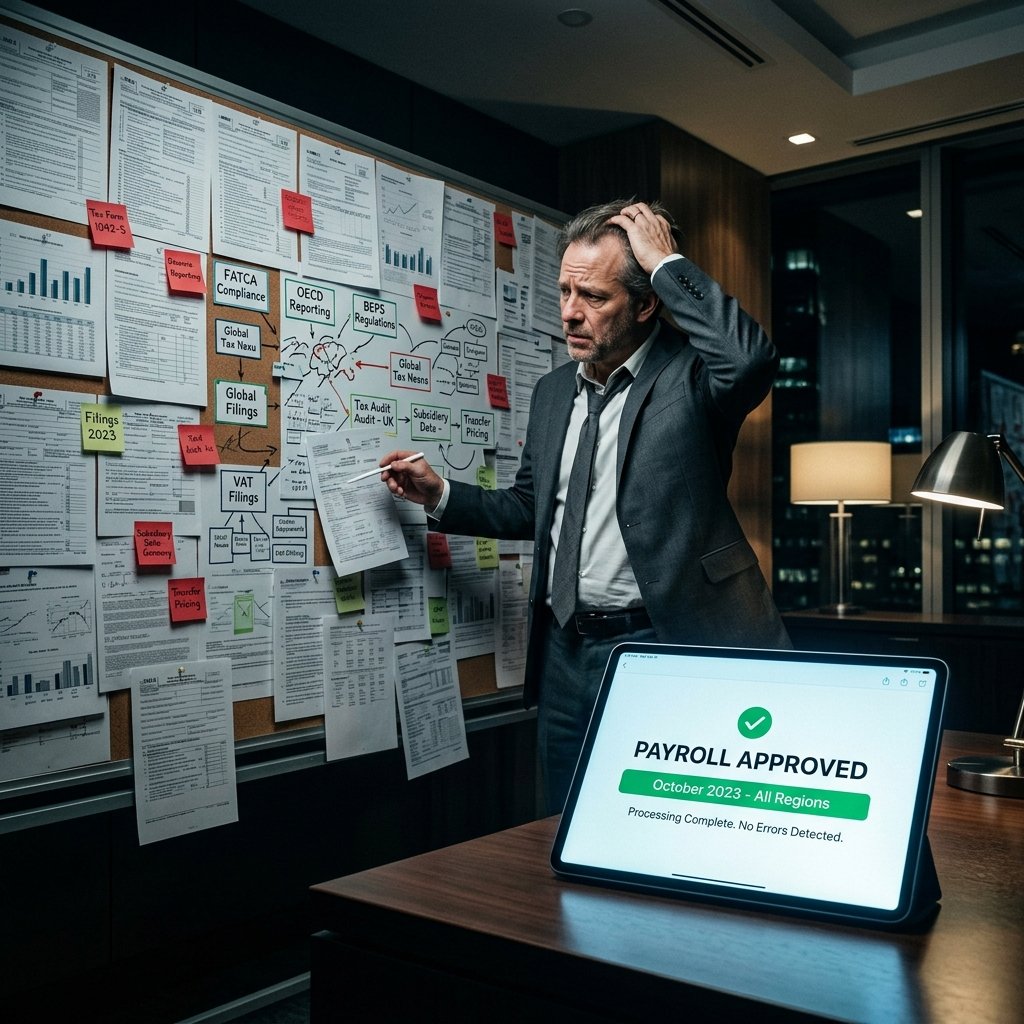
If you are a fast-growing startup or a remote-first agency, the pressure to hire the best talent globally is immense. However, the excitement of extending an offer to a brilliant engineer in Brazil or a top-tier designer in Poland is quickly overshadowed by the brutal reality of international compliance. Attempting to manage global payroll manually is a logistical nightmare that forces founders and HR teams to spend their most valuable hours wrestling with foreign tax codes instead of building their product. Relying on outdated accounting firms or trying to piece together a fragmented system of local vendors usually results in delayed payments, frustrated employees, and massive legal exposure.
To build a truly borderless workforce, you must transcend these archaic methods and adopt an Employer of Record (EOR) infrastructure. EOR platforms have fundamentally transformed how companies hire internationally by assuming all legal and tax liabilities on your behalf. By utilizing these unified systems, you can legally hire full-time employees and contractors in days without ever establishing a foreign legal entity. In this essential guide, we will dissect the exact framework you need to set up multi-country compensation without losing your mind. You will discover:
- Why traditional multi-country payroll models fail remote-first teams.
- The severe legal risks of misclassifying international contractors.
- How leveraging modern EOR platforms automates your entire global HR stack.
The Frustrating Hook: The Legal Labyrinth
You decided to go remote.
You realized that restricting your hiring pool to a 30-mile radius was incredibly stupid.
So you cast a wider net.
You found incredible talent in the UK, Canada, and South Africa.
And then reality hit you like a freight train.
You cannot just wire money to an employee in the UK and call it a day.
You have to withhold income tax.
You have to contribute to National Insurance.
You have to provide a workplace pension.
And that is just one country.
If you hire in France, you are suddenly dealing with strict 35-hour workweek laws and complex severance regulations.
If you hire in Australia, you have to navigate superannuation and mandatory leave loading.
Every single country has a completely different set of rules, tax brackets, and mandatory benefits.
Your local accountant in Texas has absolutely no idea how to handle a payroll audit in Berlin.
You try to bypass the complexity by asking everyone to become an “independent contractor.”
You think you are being clever.
You are not.
You are actually creating a ticking time bomb of legal liability.
The Tear-Down: The Misclassification Trap
Governments are not stupid.
They know exactly what you are doing.
When you classify a full-time worker as an independent contractor to avoid paying local taxes, it is called worker misclassification.
It is illegal almost everywhere.
If you control their working hours, provide their equipment, and restrict them from working for other clients, they are an employee in the eyes of the law.
If a disgruntled contractor reports you, or if a foreign tax agency decides to audit your operations, the consequences are catastrophic.
You will be forced to pay years of back taxes.
You will be hit with crippling penalties.
You will have to pay retroactive benefits and vacation pay.
And your company will be blacklisted from operating in that jurisdiction.
Trying to save a few thousand dollars by winging your global payroll strategy is the highest-risk gamble a founder can take.
You need a systematic approach that guarantees 100% compliance without forcing you to spend millions setting up local subsidiaries.
You need a platform that insulates your company from international liability.
You need a modern infrastructure that handles the heavy lifting for you.
The Pivot: The EOR Solution
The entire concept of international hiring has been permanently disrupted by the EOR model.
An Employer of Record acts as the legal bridge between your company and your international team.
They own the local corporate entities.
They employ the local legal experts.
They interface with the local tax authorities.
When you hire an engineer in Spain through an EOR, the EOR technically employs them.
The EOR runs the local payroll, deducts the correct Spanish taxes, and provides the mandatory Spanish benefits.
But the employee works exclusively for you.
You manage their day-to-day tasks, evaluate their performance, and set their goals.
You simply pay the EOR a flat monthly fee, and they handle the absolute nightmare of international compliance.
It is the ultimate operational cheat code.
And in 2026, there is one platform that executes this flawlessly.
The Infrastructure Reveal: Running on Deel
If you want to scale a global team without losing your sanity, you must use Deel.
Deel is not just a payroll provider; it is a unified global HR operating system.
It allows you to hire both contractors and full-time employees in over 150 countries.
Their localized legal experts have pre-vetted every single contract template.
You literally just fill in the salary and the start date, and Deel generates a fully compliant, localized employment agreement instantly.
The onboarding process, which used to take months, now takes minutes.
Deel also automates the entire payment flow.
You fund your global payroll with one single bulk transfer.
Deel handles the currency conversions and distributes the funds to your team around the world.
Your employees get paid on time, in their local currency, every single time.
They can even opt to receive a portion of their salary in cryptocurrency.
Furthermore, Deel manages the complex web of statutory benefits, ensuring your team gets health insurance, pension contributions, and local perks seamlessly.
It integrates directly with your accounting software to automate your global reconciliation.
It is the invisible infrastructure that powers the most successful remote companies on the planet.
Stop trying to hack your way through international tax laws.
Stop exposing your business to massive legal liability.
Centralize your global workforce, automate your compliance, and sleep soundly at night.
You need Deel.
Frequently Asked Questions
How fast can I onboard an international employee using an EOR?
Because EOR platforms like Deel already have the legal entities and compliant contracts established, you can typically onboard a new international employee in a matter of days, compared to the months it would take to set up your own subsidiary.
Is an Employer of Record liable for compliance mistakes?
Yes. When you use an EOR, they serve as the legal employer. This means the EOR assumes the liability and responsibility for local tax withholdings, labor law compliance, and statutory benefits, effectively insulating your startup from legal risks.
Can I convert my existing contractors into full-time employees?
Absolutely. EOR platforms specialize in mitigating misclassification risks. You can easily transition your long-term international contractors into full-time, legally compliant employees using a platform like Deel with just a few clicks.
Final Thoughts on the Future of Remote HR
The era of hyper-localized hiring is officially over, and the ability to recruit the best minds globally is now a baseline requirement for competitive businesses. However, attempting to navigate the labyrinth of global payroll and international compliance on your own is a dangerous distraction. By adopting a modern Employer of Record infrastructure, you instantly solve the operational bottlenecks that cripple scaling startups, ensuring your team is paid accurately and legally.
Your focus should be on building an incredible product and growing your revenue, not arguing with foreign tax agencies over withholding rates. Eliminate the friction of international hiring, protect your company from severe legal penalties, and give your remote workforce the seamless onboarding experience they deserve. Upgrade your global HR stack today by leveraging the powerful automation of the official Deel platform.
If you are also looking to automate your lead generation while you scale your team, explore our comprehensive guide to B2B sales automation here.